Breaking Barriers: Nonverbal Communication for Autism
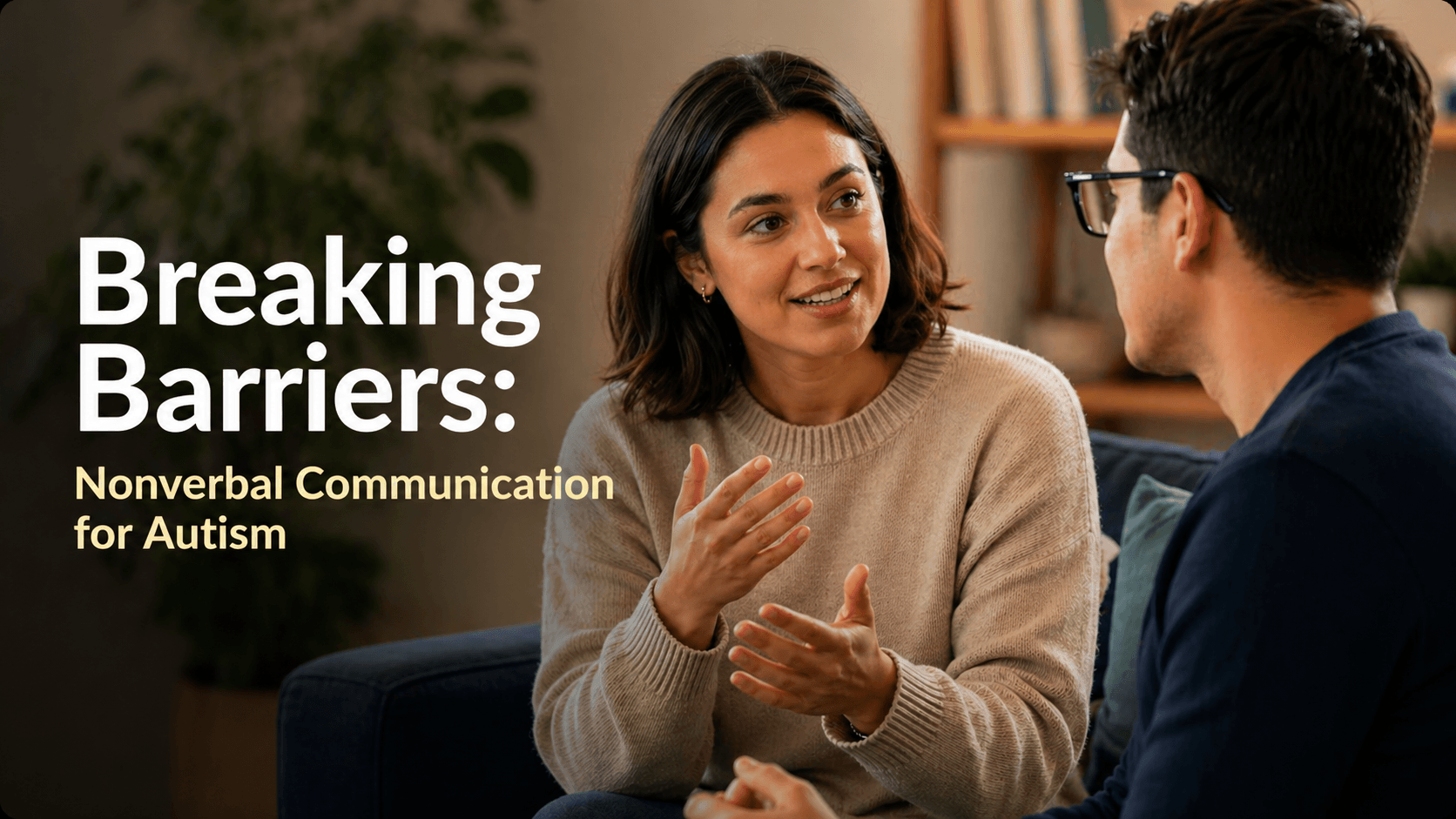
Helps individuals on the autism spectrum build confidence in reading and responding to non-verbal communication cues—across everyday social and workplace situations.
Helps individuals on the autism spectrum build confidence in reading and responding to non-verbal communication cues—across everyday social and workplace situations.

Learners progress through a clear sequence: Introduction → Exploration → Practice → Reinforcement designed to build understanding step by step.

Flashcards, accordions, and labeled visuals break down key concepts into manageable, easy-to-understand pieces.

Real-world examples allow learners to interpret non-verbal cues in context and apply what they've learned.
Frequent knowledge checks provide immediate, supportive feedback to reinforce understanding.

"Think About It" prompts encourage learners to connect content to their own experiences and apply it in everyday situations.
The goal is to turn something often abstract and confusing into something clear, structured, and actionable in everyday situations.
Learners are introduced to a specific type of non-verbal communication through clear explanations and examples.
Interactive elements such as flashcards and labeled visuals break down key cues into simple, recognizable patterns.
Learners review realistic scenarios that demonstrate how non-verbal cues appear in everyday interactions.
Short, focused questions reinforce understanding and provide immediate feedback.
"Think About It" prompts encourage learners to connect what they've learned to their own experiences and apply it in real situations.